
Hydrological monitoring is the core foundation for water resource management, flood prevention and disaster reduction, and the operation and maintenance of water conservancy projects. Precise measurement of flow velocity and volume is a key part of hydrological work. The traditional manual flow measurement mode is limited by adverse hydrological conditions, low operational efficiency, and difficulty in ensuring data accuracy. It has become increasingly unable to meet the modern water conservancy monitoring requirements of “precision, intelligence, and regularity”. The emergence of Doppler flow measurement unmanned boats integrates acoustic Doppler flow measurement technology with unmanned boat intelligent platforms, achieving fully automatic, unmanned, and high-precision measurement of water flow velocity and volume. It has become the core technological equipment to solve the problems of traditional flow measurement, injecting new momentum into the construction of smart water conservancy.
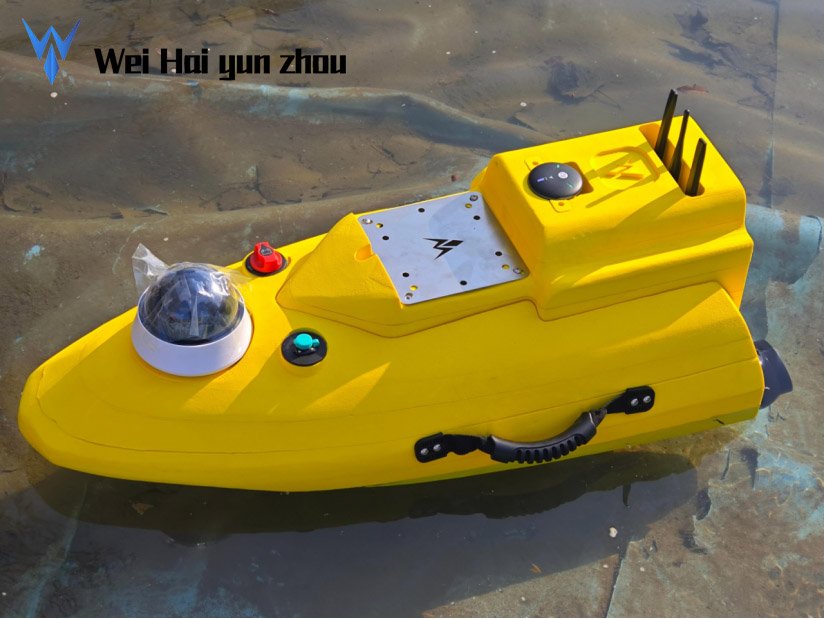
Core advantages: Hardcore configuration specifically designed for inland waters
1. Self-righting deep V hull, capable of handling complex waters
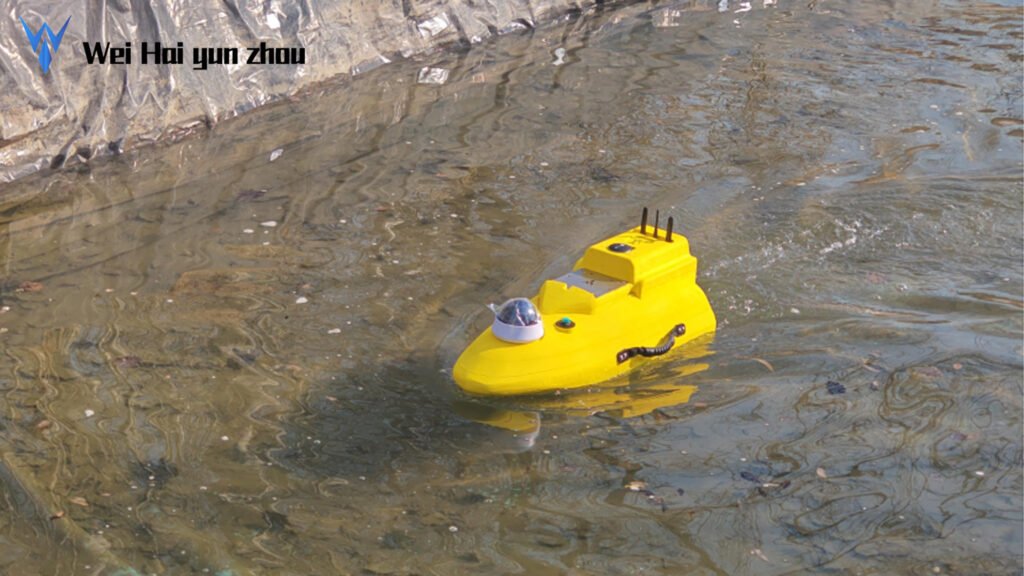
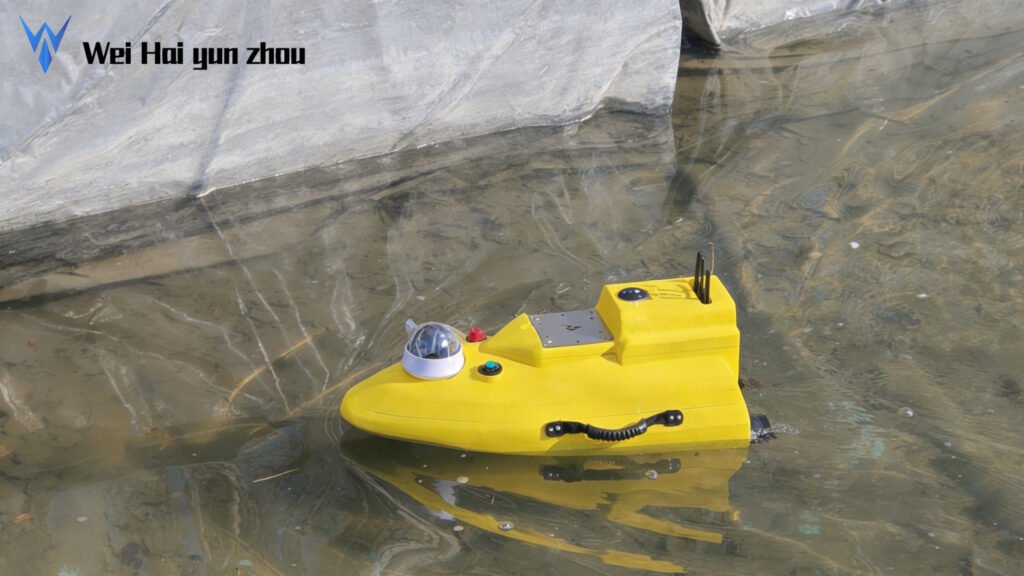
Anti-overturningHighly competent: The deep V hull combined with self-righting design enables automatic balance recovery even in 5-level wind waves, ensuring the safety of equipment operations in turbulent currents, shoals, and other complex waters.
High maneuverability: The hull is made of lightweight PP material, weighing only 12KG, allowing one person to easily carry and deploy it; the draft depth is only 5cm, enabling flexible navigation through shallow areas, tributaries, and other regions where traditional equipment cannot reach.
2. Multi-module integration, adaptable to multiple scenarios
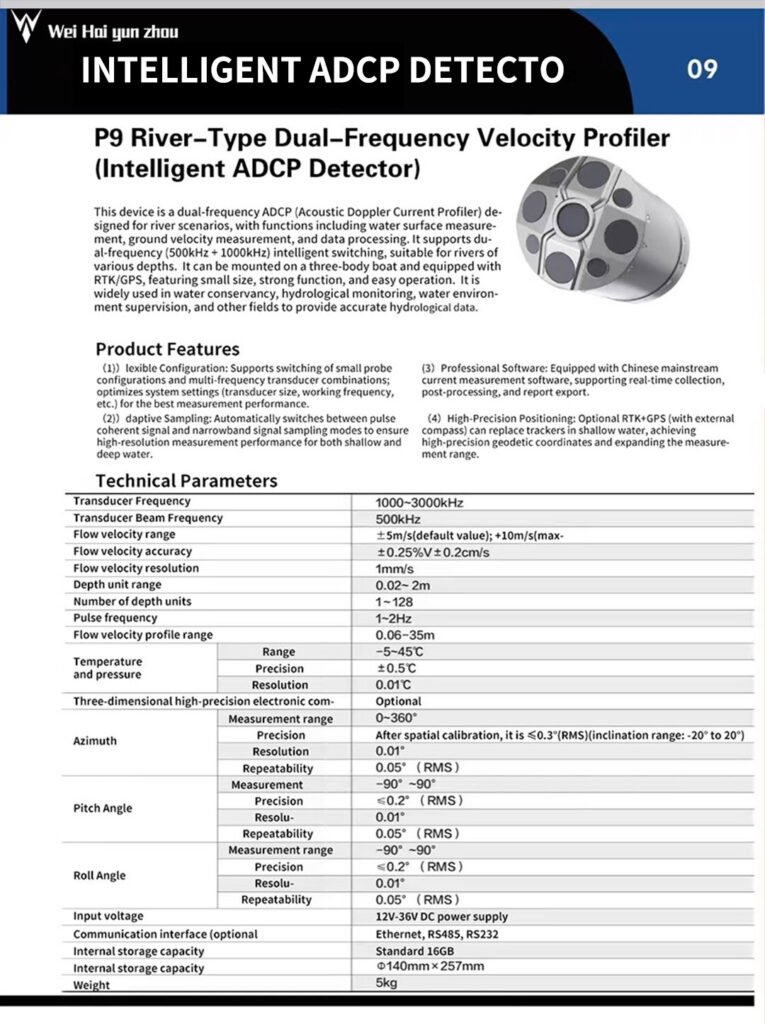
Doppler flow measurement core capability: Equipped with ADCP (Acoustic Doppler Current Profiler) Doppler current profile instrument, it can accurately measure the flow velocity and direction of different water layers, and the data is transmitted in real time to the shore-based terminal, with a measurement accuracy of ±1%, meeting the professional requirements of hydrological monitoring.
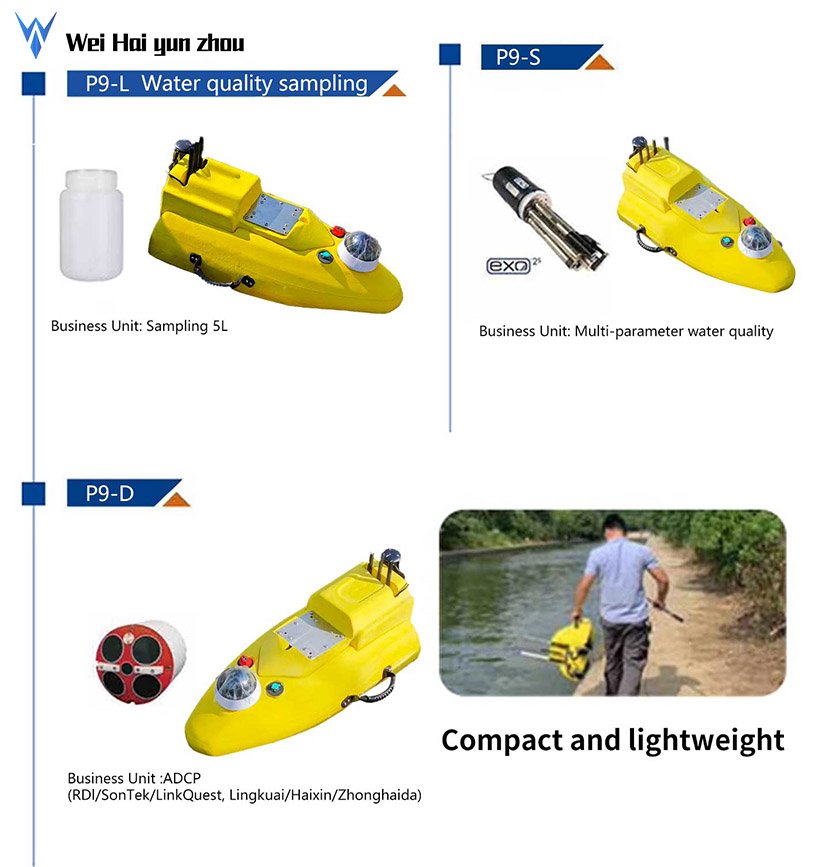
Flexible expansion functions: Supports the installation of water quality sampling modules (5L large-capacity sampling bottles), single-beam depth sounder, RTK positioning modules, etc., enabling the simultaneous completion of water quality sampling, underwater topographic mapping, and other tasks, achieving “one voyage, multiple data collection”.
3. Intelligent control, completed by a single person
Full autonomous operation process: Supports preset route automatic cruising, one-click return to base, low battery warning functions, and combines GPS + dual-mode Beidou navigation. The positioning accuracy reaches centimeter level, ensuring the precise position of the flow measurement section.
Convenient control experience: Equipped with a 7-inch high-definition remote controller, supporting remote control via mobile phone / computer. Staff can complete task planning and real-time monitoring from the shore base without water entry operations, completely avoiding safety risks.
In terms of hardware design and intelligent control, the Doppler flow measurement unmanned boat fully adapts to the operation requirements of various water bodies, combining environmental adaptability and operational convenience. The hull is mostly made of lightweight carbon fiber or high-strength anti-corrosion materials, combined with self-righting, anti-overturning, waterproof, and anti-sinking designs. It can operate stably in 5-6 level wind waves and complex water flow environments. Its shallow draft characteristic can cover blind areas that traditional flow measurement equipment cannot reach, such as shallow beaches, inland river tributaries, and reservoir drawdown areas. Navigation integrates GPS + dual-mode Beidou positioning, and some high-end models are equipped with RTK differential positioning, achieving centimeter-level precise trajectory control, supporting preset flow measurement sections, automatic cruise flow measurement, fixed-point repeated flow measurement, and other operation modes. The control end is equipped with shore-based control terminal, mobile phone / computer remote control system, supporting one-click start, one-click return to base, and low battery automatic warning. A single person can complete the entire process operation from task planning, equipment deployment, flow measurement operation to data export, significantly improving the flow measurement efficiency, compressing the full cross-section flow measurement time of several kilometers of river from traditional several hours to tens of minutes.
In addition to the core Doppler flow measurement function, most mainstream Doppler flow measurement unmanned vessels adopt a modular design, which enables them to flexibly carry water quality sampling modules, multi-parameter water quality sensors, depth meters, video monitoring equipment, etc., to achieve integrated multi-task operations of “flow measurement + sampling + water quality monitoring + topographic mapping”, truly realizing “one voyage, multiple data collection”. In the operation and maintenance of water conservancy projects, it can monitor the discharge flow of dams and the water flow in channels, providing data support for the safe operation of the projects; in the flood control and disaster reduction work, it can quickly respond to sudden water conditions such as heavy rain and floods, enter the affected water areas to complete emergency flow measurement at the first time, providing real-time and accurate hydrological data for flood forecasting and flood control decision-making; in water resource management, it can conduct regular flow measurement for rivers, lakes and reservoirs, accurately grasp the temporal and spatial distribution characteristics of water resources, providing scientific basis for water resource scheduling and water use measurement; in ecological hydrological monitoring, it can simultaneously complete flow velocity measurement and water quality sampling, helping with water ecological protection and restoration work.
From routine hydrological monitoring to emergency water situation handling, from the operation and maintenance of water conservancy projects to the refined management of water resources, the Doppler current measurement unmanned vessel has been widely applied in numerous fields such as water conservancy departments, water conservancy project units, flood control command institutions, and environmental protection departments. It has become an important equipment in the construction of smart water conservancy. Its popularization and application not only promoted the transformation of the hydrological current measurement industry from “labor-intensive” to “technology-intensive”, but also enabled water monitoring to achieve “full coverage, full intelligence, and full availability” upgrades, significantly improving the accuracy, timeliness, and continuity of hydrological data.
With the deep integration of technologies such as artificial intelligence, 5G communication, and the Internet of Things, Doppler flow measurement unmanned vessels are evolving towards multi-boat collaborative flow measurement, AI intelligent data analysis, and autonomous decision-making and handling. In the future, they will achieve synchronized flow measurement in larger water areas, intelligent interpretation and early warning of flow measurement data, and seamless connection with the water resources big data platform and the smart flood control system, thereby establishing a “perception – transmission – analysis – decision-making” closed-loop system for hydrological monitoring. As the core equipment for the intelligence of hydrological monitoring, Doppler flow measurement unmanned vessels will continue to provide solid technological support for water resource protection, flood control and disaster reduction, and the modernization of water conservancy. They will use precise hydrological data to safeguard the tranquility of rivers and empower the construction of water ecological civilization.