
In the operation scenarios of rivers, lakes and seas, the traditional manual water operation mode is often accompanied by safety risks such as drowning, collision and equipment failure. The emergence of unmanned ships is like installing a “safety shield” for waterborne operations. With its intelligent and unmanned technical features, it has fundamentally changed the safety logic of waterborne operations, leading the once risky waterborne operations into a new era of greater safety and efficiency.
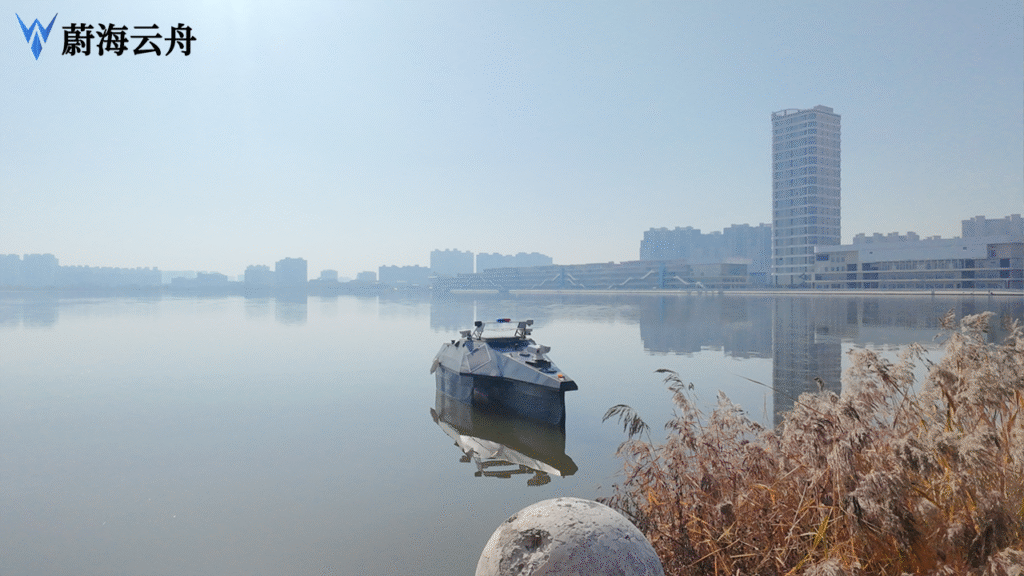
From “Shared risk between humans and Vessels” to “Separation of humans and vessels” : Reconstructing the Safety bottom line for Waterborne Operations
In traditional waterborne operations, personnel need to carry out tasks on board, facing three major safety threats: bad weather, complex waters and equipment malfunctions. The unmanned vessel has completely broken this risk chain through its “separation of man and machine” operation mode.
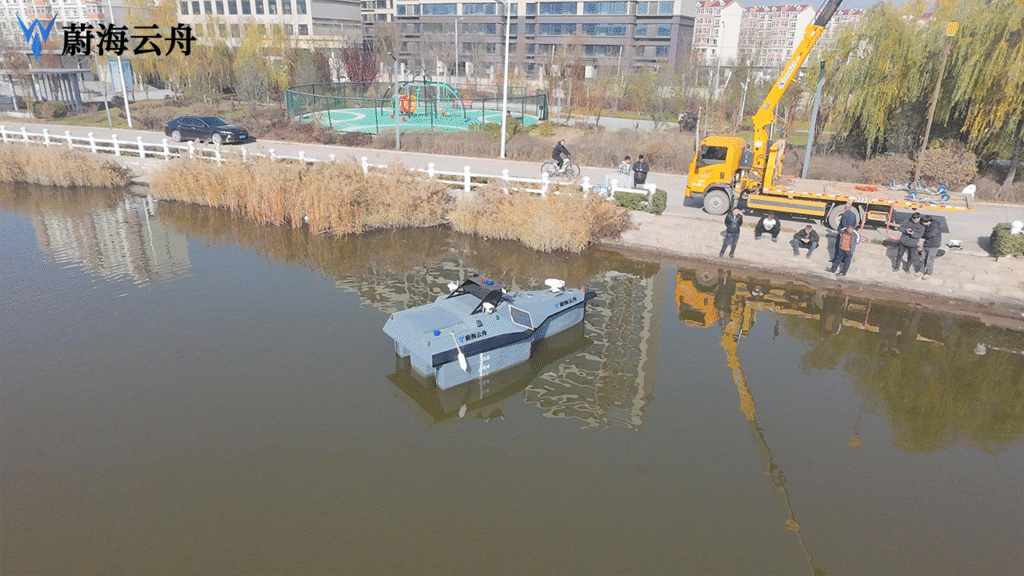
In terms of environmental adaptation, unmanned vessels adopt anti-wind and wave hull designs (such as catamaran structures and streamlined hulls) and intelligent stability control systems, enabling them to operate stably in winds and waves of 5 to 6 levels without exposing personnel to extreme weather conditions. For dangerous waters such as shallows, reefs and rapids, the high-precision navigation and obstacle avoidance system of unmanned vessels (integrating GPS, radar and sonar) can detect risks in advance and automatically plan safe routes, avoiding the hidden dangers of vessel grounding and collision.
In terms of equipment reliability, the fully sealed protection technology of unmanned vessels protects the power system and electronic equipment from water immersion and corrosion. Moreover, they are equipped with self-diagnosis and emergency response modules for faults – in case of equipment abnormality, they can automatically switch to the backup system or trigger the return program, eliminating the need for on-site personnel to repair. For instance, a certain unmanned water quality monitoring vessel encountered a thruster failure during operation. The system automatically activated the emergency power and successfully returned independently, with no one in danger throughout the journey.
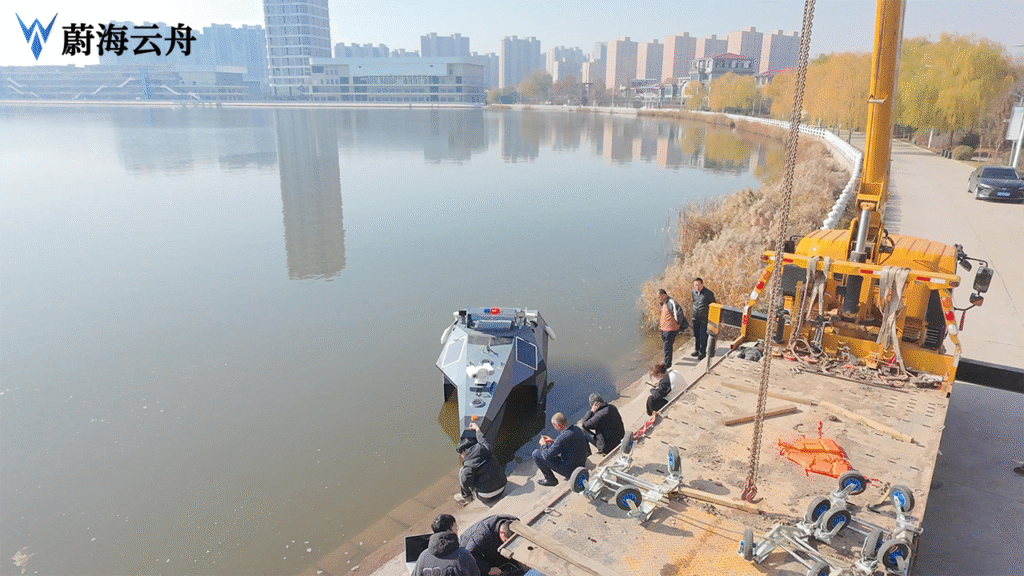
Multi-scenario Safety Empowerment: The “Safety Operation Map” of Unmanned Ships
The safety value of unmanned vessels is fully demonstrated in various water operation scenarios and has become a “safety necessity” in all fields.
Water environment governance: Keeping sampling and monitoring away from risks
Traditional water quality sampling and underwater concealed tube detection require personnel to drive boats into polluted waters, posing risks of poisoning and infection. Unmanned vessels are equipped with automatic sampling devices, multi-parameter water quality sensors, and side-scan sonar. They can “replace human operations” in polluted areas and dangerous water bodies – completing water sample collection, water quality analysis, and hidden pipe positioning through remote control. Personnel only need to be on the shore or at the control center to obtain data, completely avoiding the health risks of direct contact with polluted water bodies. In the monitoring of the sewage outlet in a certain chemical industrial park, unmanned vessels replaced manual labor to enter highly polluted waters, successfully mapping out the pollution diffusion path. This not only provided data for governance but also ensured the safety of personnel.
Emergency Rescue: From “Life for Life” to “Intelligent Rescue”
Water rescue has always been a high-risk operation, and rescue workers often face the danger of drowning or being swept away by strong currents. The high-speed power and intelligent navigation features of unmanned vessels make them “rescue pioneers” – in drowning rescue operations, unmanned vessels can quickly reach the location of the drowning person and carry out rescue operations by remotely placing life buoys and life rafts. In flood rescue operations, it can enter dangerous areas submerged by floodwaters, investigate disaster situations, transport supplies, and prevent rescue workers from taking risks. During a flood in a certain river basin, unmanned vessels operated continuously in the rapids for 72 hours, completing over 30 material deliveries and disaster situation investigations. There were no casualties throughout the process, which overturned the traditional perception that “rescue operations must involve risks”.
Engineering Surveying: Making High-risk Surveying “Unmanned”
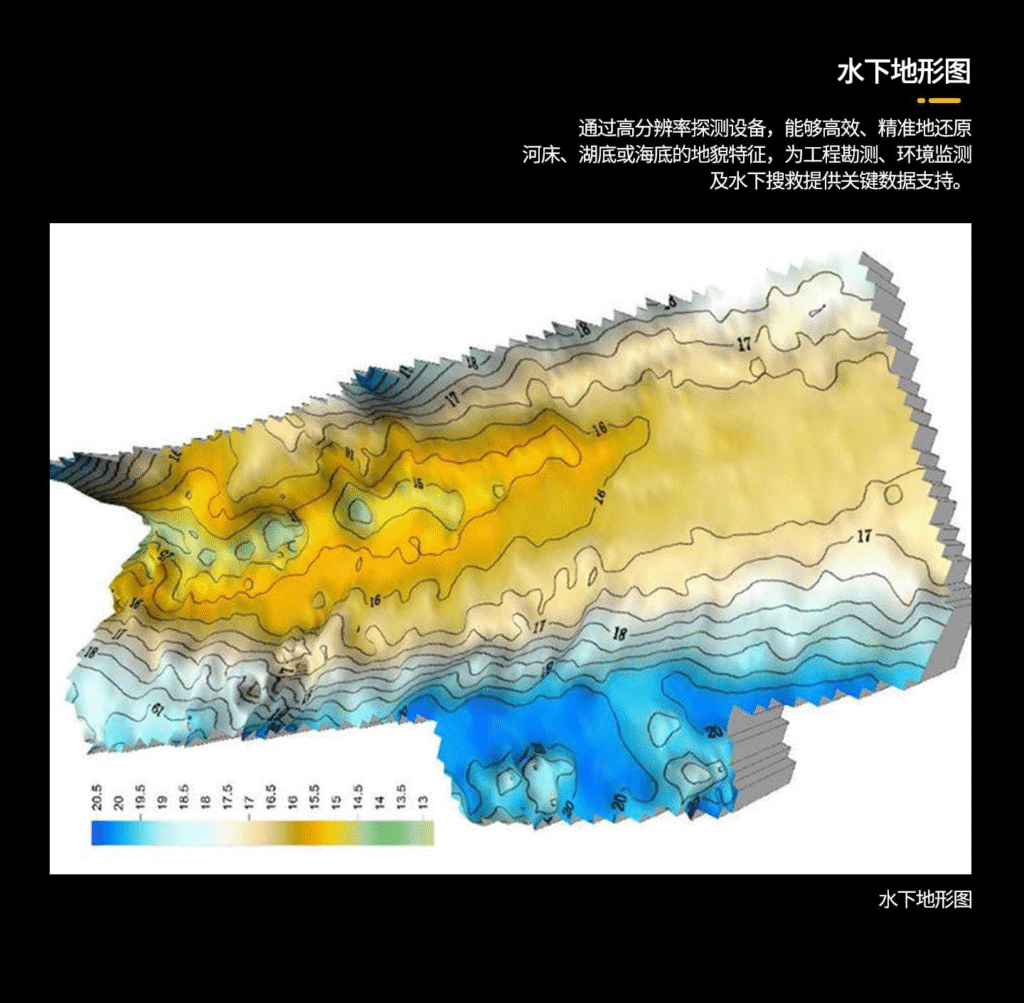
In the surveying and mapping of water conservancy and Marine engineering, personnel need to operate precision instruments on ships, facing the risks of ship capsizing and instrument damage. Unmanned vessels, equipped with lidar and multi-beam depth sounders, can automatically complete the mapping tasks of underwater topography, channel siltation and embankment structures. In the inspection of a large reservoir embankment, unmanned vessels replaced manual operation and obtained high-precision three-dimensional models of the embankment under complex hydrological conditions. This not only ensured the accuracy of surveying and mapping data but also avoided the operational risks of personnel on bumpy vessels.
Technology Boost: The “Safety Moat” of Unmanned Ships
The safety performance of unmanned ships stems from the “protection and escort” of a series of hardcore technologies.
The multi-source sensor fusion in the perception layer (vision, radar, sonar, inertial navigation) enables unmanned vessels to comprehensively perceive environmental risks, such as identifying obstacles, shallows, and abnormal water currents in advance. The AI obstacle avoidance and path planning algorithm at the decision-making level can calculate the optimal safe route within milliseconds to deal with sudden risks. The redundant power system and emergency buoyancy device at the execution level provide the last line of defense for extreme faults.
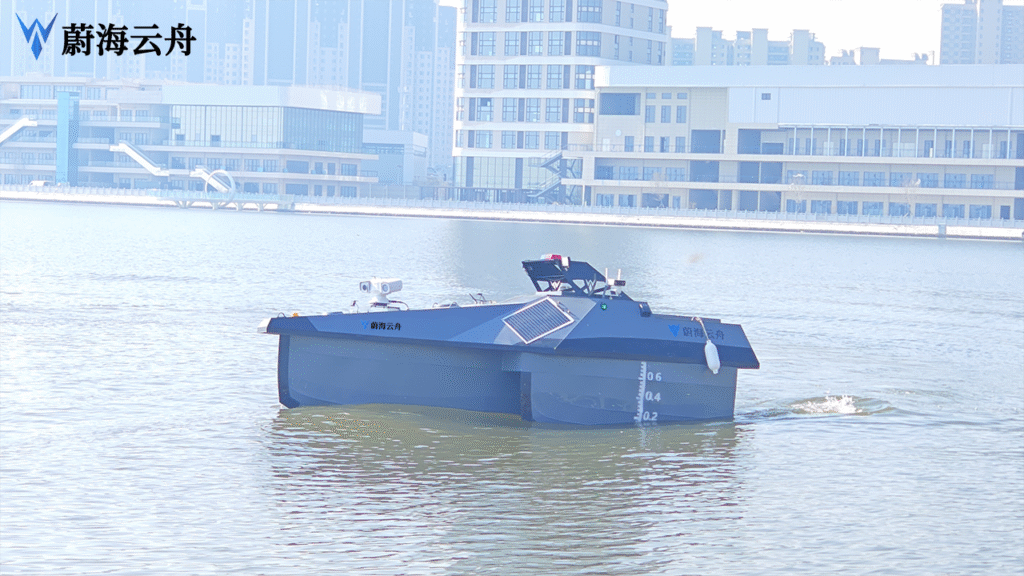
In addition, the remote monitoring and intelligent early warning system can monitor the location, status and equipment parameters of unmanned vessels in real time. Once situations such as insufficient battery power, communication interruption or abnormal movement occur, it will immediately trigger an early warning and activate the emergency response plan, achieving “no one on site, safety under control”.
Conclusion: Safety as the foundation, sailing towards a broader future of water-based operations
The emergence of unmanned vessels is not merely a simple “unmanned replacing manned”, but rather a reconfiguration of the safety concept for water operations – from “passive avoidance” to “active safety”, and from “reliance on experience” to “technical support”. It uses intelligent technological means to minimize the safety risks of water-based operations, transforming more water-based operations from “high-risk areas” to “safe areas”.
In the future, with the continuous iteration of AI, 5G and new material technologies, the safety performance of unmanned ships will be further upgraded. They will not only be able to adapt to more complex offshore and polar environments, but also achieve “full coverage of safe operations” in more specialized fields, such as offshore wind power operation and maintenance and distant-water fishery monitoring. It can be foreseen that unmanned ships will take “safety” as the foundation, promoting water operations to move towards a more efficient, intelligent and extensive direction, and opening up a safer technological channel for mankind to develop and utilize the ocean and safeguard water area safety.