
With the large-scale development of photovoltaic power plants, photovoltaic inspection has put forward higher requirements for the equipment’s environmental adaptability, fault detection capabilities, and operation and maintenance efficiency. In response to the special environment of Yantian, characterized by high salt fog, high humidity, and high corrosion, the Unmanned Photovoltaic Inspection Ship model developed by Hangzhou Weihai Phoenix Technology Co., Ltd. will enter the production stage. This ship is designed to perform infrared temperature measurement on the backsheets of photovoltaic panels and MC4 connectors, as well as to detect abnormal heat generation, providing a more flexible and cost-effective intelligent inspection solution for photovoltaic power plants.
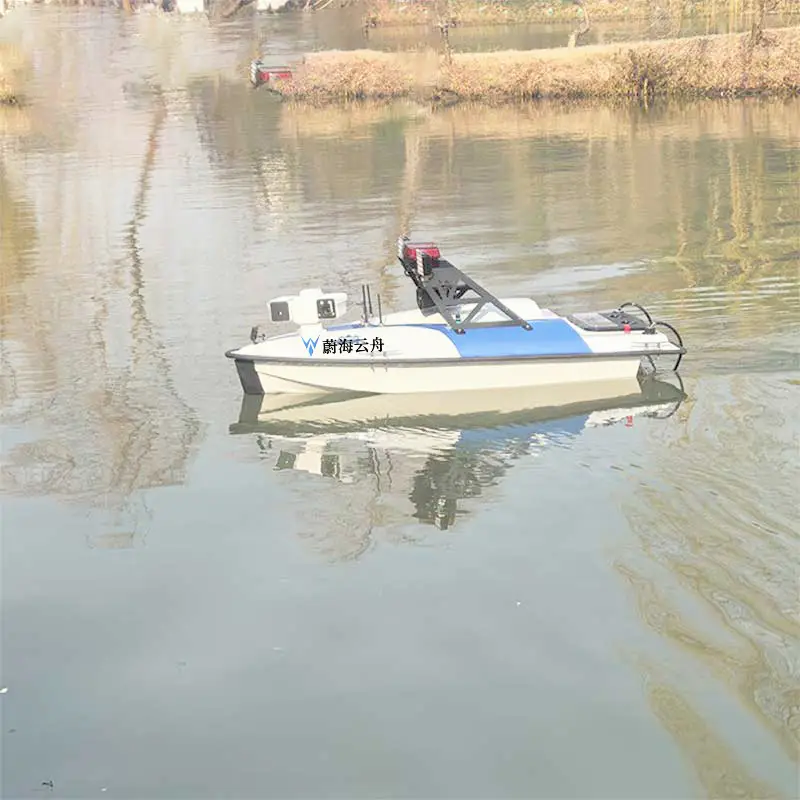
Two modules work together to accurately detect abnormalities
The product design allows for the configuration of infrared and visible light modules according to actual needs, enabling temperature monitoring of key components such as the backplate of photovoltaic panels and MC4 plugs. Based on temperature and temperature difference thresholds, the system can capture images of areas with abnormal heat generation and send alerts. It also links the location coordinates, temperature values, infrared thermal images, and visible light comparison images, helping maintenance personnel identify abnormalities promptly and improve the efficiency of fault diagnosis.
Focusing on hardware corrosion resistance, dual-light temperature measurement, intelligent alerting, and data management, the Weihai Yunzhou photovoltaic inspection unmanned ship is designed to meet real-world requirements. It continues to advance product development and production, providing a more practical and cost-effective alternative for intelligent inspection in photovoltaic power plants.
The Weihai Yunzhou photovoltaic inspection unmanned ship makes photovoltaic inspections more intelligent and equipment maintenance more efficient.

For the salt pan environment, strengthen the anti-corrosion design
Facing the operational conditions of high salt fog, high humidity, and high corrosion, the product will focus on optimizing its corrosion-resistant design. All metal components must be treated to prevent corrosion, thereby enhancing the equipment’s ability to adapt to special environmental conditions and meeting the actual usage requirements for outdoor inspections.
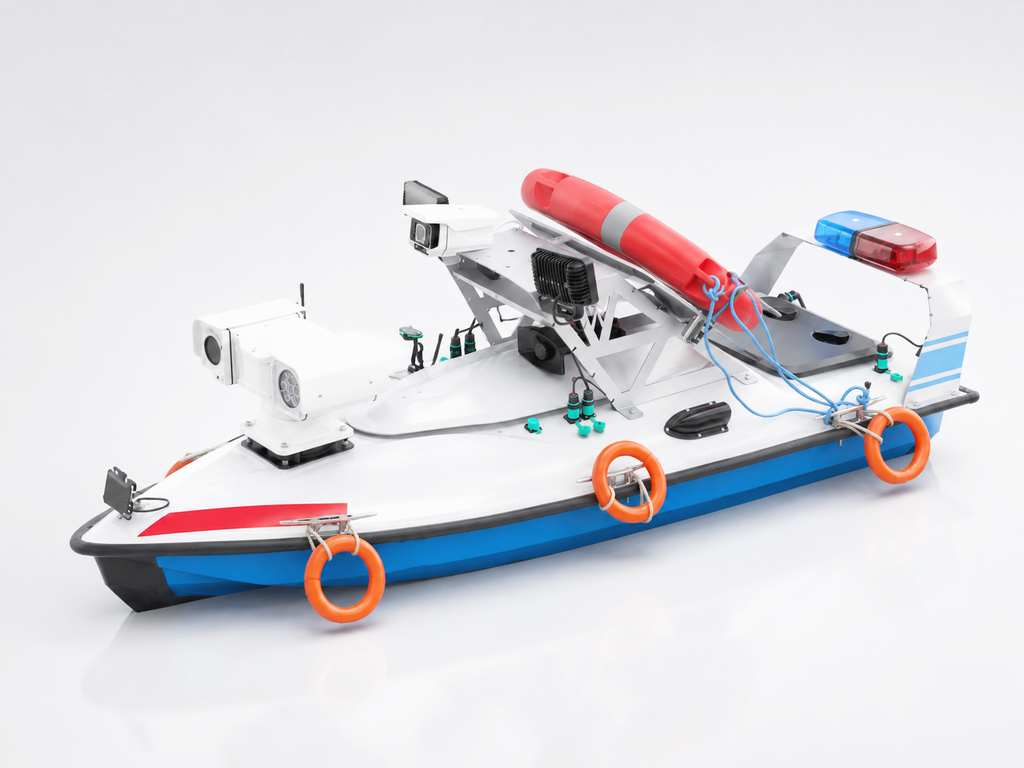
Intelligent route planning, balancing coverage and efficiency in inspections
The unmanned ship will plan its navigation routes in consideration of the layout of on-site photovoltaic installations and the points marked on the drawings. The goal is to cover all the designated inspection locations and complete the testing tasks. The navigation and data collection processes will be continuously optimized, helping to enhance the automation and precision of the inspection operations.

It is easy to operate, and data management is more efficient
The software system features a Chinese interface, with an emphasis on ease of use. The project will provide on-site training to help maintenance personnel operate the equipment independently and handle common issues after simple training. Additionally, inspection data can be exported, and the system will be integrated with the existing operation and maintenance platform of the power station, along with standardized data formats, to improve the management and utilization efficiency of inspection data.
From hardware corrosion protection and dual-light temperature measurement to intelligent alarm systems and data management, the Weihai Yunzhou photovoltaic inspection unmanned ship is designed based on actual operational needs. It continues to develop products and produce them, offering a more practical and cost-effective alternative for photovoltaic power stations.
The Weihai Yunzhou photovoltaic inspection unmanned ship makes photovoltaic inspections more intelligent and equipment maintenance more efficient.